



For as long as we frail little mortals have walked the Earth, we’ve been wondering how to extend our fleeting lease on life. Life – with its known quantities, its predictable realities, its measurable data – has always felt safer than death, which represents not only the erasure of all that, but a total vanquishing of the self to boot!
Efforts to extend the human lifespan began long before biohacking, health optimization, or the very concept of the scientific method. In the 1200 BCE Epic of Gilgamesh, King Gilgamesh himself undertakes a massive journey in search of the secret of eternal life. In Daoist China, herbal teas, breathwork, and a study of the body’s alchemical makeup – now popularly referred to as “Chinese Medicine” – were employed with the intention of extending patients’ lifespans.
Stories of a Fountain of Youth with restorative waters cropped up in the writings of Herodotus and Christian patriarch Prester John. Spanish conquistador Juan Ponce de León traveled to North America in search of the fountain, which was rumored to be located in a mythical land called “Bimini.” From ancient Mesopotamia to the pre-modern Islamic world to medieval Europe, an immortality-granting “elixir of life” was sought by clerics, caliphs, and alchemists.
In the 18th century, the Enlightenment released a tidal wave of rationalism across Europe that would eventually result in the dawning of the scientific age. Mythic journeys and alchemical elixirs were replaced with a focus on public health. French chemist Louis Pasteur (among others) popularized the idea of germ theory, that foreign pathogens cause illness and health is the state of being pathogen-free. In the 19th century, major cities like London, Paris, and New York underwent massive improvements to their water purification and sanitation systems. Vaccines and antibiotics were introduced.
All of these efforts served to increase life expectancy dramatically, but did nothing to solve one of the greatest bugbears of the human experience: aging. The lifespan could be extended, but the body’s wellness and vitality could not.
Perhaps you’re wondering: How do peptides figure into all this? Rest assured, there’s more in store for you here than a mildly interesting history lesson.

Peptide Research, Done Cleanly — Peptide Partners. Independent HPLC/MS, batch COAs, and endotoxin screening to USP <85> validate identity and purity of peptides for research. Browse inventory and view certificates at Peptide Partners.
If your interest in complex amino chain health protocols could be traced back to a single medical phenomenon, it would be the development of the field of gerontology.
Commonly understood as the study of aging, gerontology first emerged in 1935, when Clive McCay and his colleagues at Cornell University first discovered that caloric restriction in mice could extend their lifespan by as much as 30-40 percent. McCay et al.’s findings would be underscored some thirty years later by anatomist Leonard Hayflick, who discovered that there’s a maximum number of times a normal human cell population can divide in a culture before it stops altogether, leading to cellular senescence. The discovery of this maximum number – referred to as the “Hayflick limit” – would go on to revolutionize the study of aging and the field of gerontology with it.
In the mid-1950s, the American gerontologist Denham Harman advanced the free radical theory of aging. Harman’s theory stipulates that the human body ages because of something called “oxidative damage,” caused by free radicals that impair the functioning of DNA, lipids, and proteins. In other words, oxidative stress basically looks like the slow degradation of a cell over time, strain followed by the steady impossibility of recovery.
For those of you familiar with how Human Growth Hormone stimulates protein synthesis, which then contributes to cell repair, this will no doubt ring a bell. Now we’ve arrived at one of the foremost building blocks of the broader longevity movement: reverse-aging the already-senesced.
Ponce de León never found that elusive Fountain of Youth – his sixteenth century expedition landed in what we now call Florida. And while the search for an immortality-granting elixir of life remained on permanent hiatus, the field of gerontology underwent a major commercial boom during the second half of the twentieth century.
Hormone therapies emerged to mitigate the effects of menopause in women and adrenopause in men. Endocrinologist-cum-gerontologist Harry Benjamin found a way to expand his hormone replacement therapy (HRT) practice to include a demographic that was itself rapidly expanding, even in the mid-twentieth century: male-to-female transsexuals. By prescribing these patients the estrogen typically prescribed to natal females in menopause, Benjamin induced a cosmetic change in sex. One of his transsexual patients reported him musing: “If we cannot alter the conviction to fit the body, should we not, in certain circumstances, alter the body to fit the conviction?”
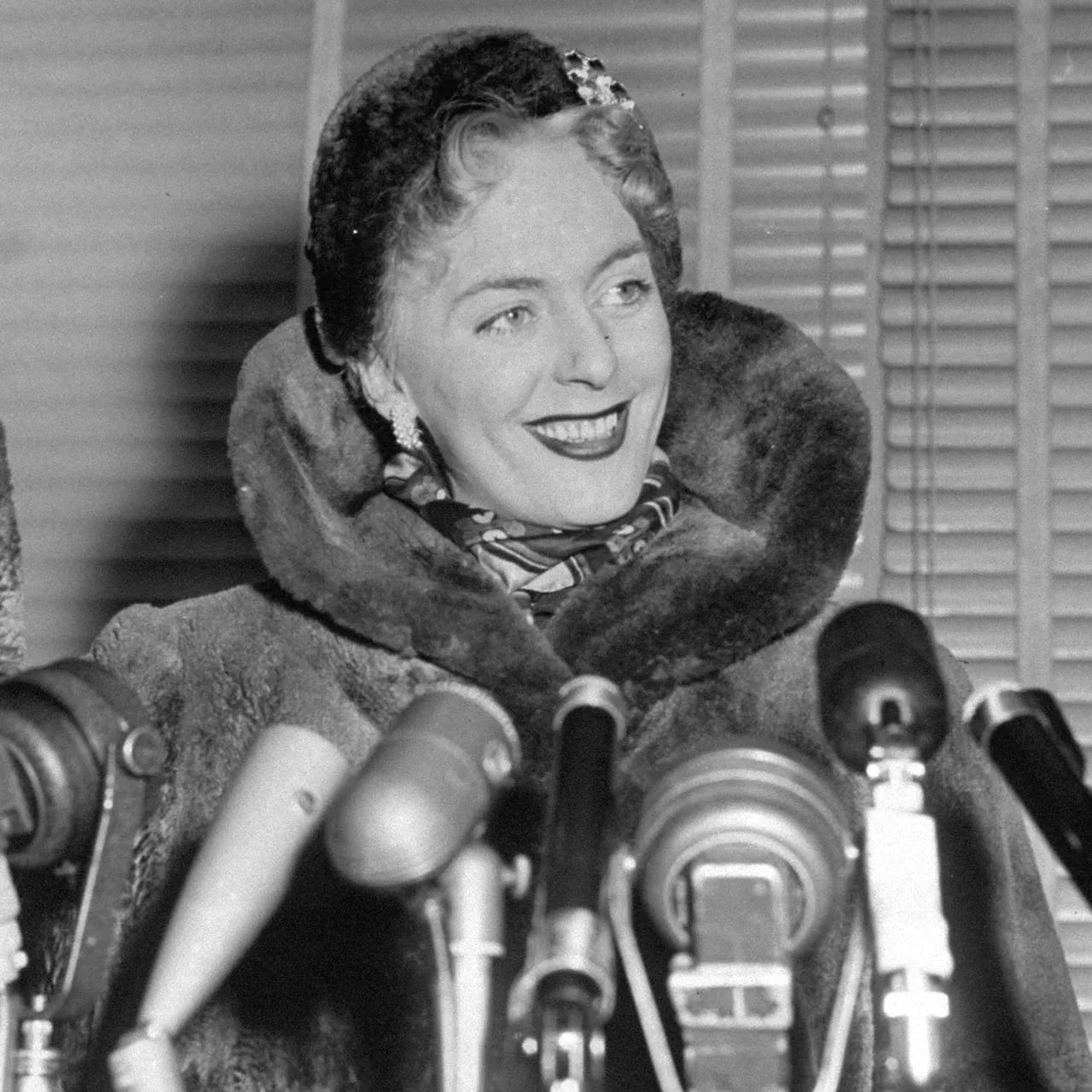
Benjamin’s legacy would amount to reshaping gerontology as a field concerned not just with the science of senescence, but with its aesthetics. As the twentieth century sprinted to a close, American athletes and bodybuilders embraced the performance-enhancing effects of testosterone and HGH. The health-conscious sought antioxidant supplements like vitamin E and resveratrol to reduce oxidative stress. The American Academy of Anti-Aging Medicine was founded in 1992, much to the chagrin of a broader gerontologic community who dismissed its leadership as uncredentialed and its methods as “quackery.”
In the new millennium, gerontology would undergo a set of revolutionizing advancements. First, the discovery of the mTOR (or mechanistic target of rapamycin) pathway, a “master regulator” enzyme that controls major cellular processes like growth, motility, proliferation, survival, transcription, and protein synthesis. Then, the discovery of another enzyme family called sirtuins, which work with coenzyme NAD+ to regulate cellular health, metabolism, and stress resistance. Discoveries like these were enough to cause leading scientists to characterize aging as a “disease” that can be medically treated like any other.
Maybe you had a moment of recognition when you read the word “enzyme.” If you’re as into peptide science as we are at Peptide Partners, then you’ll recognize enzymes as a specific category of protein that facilitate necessary biochemical reactions like digestion, metabolism, and DNA replication. When such reactions happen with frequency and efficiency, the human body is often felt and observed to be “well” or vital.
As we know, all peptides are proteins (i.e. linked chains of amino acids), but not all proteins are peptides. Peptides are conventionally understood to be shorter chains of amino acids, typically 50 or less1, that lack the larger and less stable 3D structures of bigger proteins. Enzymes are quite large, ranging in length from 62 amino acids to over 2,500. They help maintain the health and structure of peptides, which in turn act directly on the systems of the body.
Recall the longevity scientists who determined that caloric restriction could increase the lifespans of mice in the 1930s. GLP-1 agonists like semaglutide and tirzepatide mimic the GLP-1 blood sugar hormone to improve blood sugar control and reduce appetite; this is precisely why they are so effective in the treatment of type 2 diabetes, which is pancreatic insulin resistance often resulting from excessive caloric intake.
And then there are peptides like BPC-157 and Thymosin Beta-4, both of which aid in tissue repair, anti-inflammation, and blood vessel growth. Whether organic or synthesized, both facilitate cellular recovery in ways that would appear to reverse-senesce the cell, and thus enhance longevity in the body.
But before we get too far ahead of ourselves, let’s return to the earlier days of gerontology and anti-aging science. Recall how Harry Benjamin introduced HRT to a new population – one ostensibly more concerned with the cosmetic effects of anti-aging endocrinology (and thus their psychological benefits) than longevity alone.
As it turns out, it’s pretty hard to separate the desire to live longer from the desire to look as if we’re living longer. It’s all too human, after all: even if it doesn’t have a genotype, wellness certainly has a phenotype, and our evolutionary instinct is forever driving us towards the appearance of physical fitness.
Perfectly understandable, but it still begs the question: when does an investment in cosmetic “fitness” overtake or potentially jeopardize an investment in real, biological health? Harry Benjamin’s case is an excellent example: HRT is an endocrine health longevity treatment for a woman receiving estrogen and a psychological health longevity treatment for a man receiving estrogen, with the reasoning that the cosmetic changes will effect better psychological health, and thus a longer lifespan, in the gender-distressed patient.
But what about the long-term consequences of taking estrogen and testosterone? Or, for that matter, getting a deep plane facelift, injecting HGH bought at the gym, or taking high doses of melanotan? These interventions are bound to yield physical changes, which could result in positive psychological changes – but do these boosts in mood come at the expense of bona fide bodily longevity?
Take Bryan Johnson, the tech centimillionaire whose mission to “not die” is as inscrutable as his methods. Johnson is striving for immortality – or something close to it – through a $2 million per year health protocol that includes everything from nightly infrared therapy to electromagnetically stimulating the muscles of his abdominal floor to blood transfusions and experimental stem cell treatments. Johnson suffered a dangerous allergic reaction to fat injections in his face (undertaken to “restore lost volume”), and a series of infections due to the immunosuppressive effects of his experimental rapamycin protocol. While some of his interventions could very well prove beneficial to experimental gerontology and the longevity movement more broadly, missteps like these suggest that Johnson’s mission may be just as motivated by fear and vanity as by a desire to explore new frontiers in anti-aging science.
Does it make sense to pursue immortality at all costs, even if it could mean dying in the process?
For those of us who value empirical data and legitimate advancements in medical research, longevity is an uneven field. How to separate the quacks from the scientists? The life-sustaining interventions from the cosmetic ones? When does the life-sustaining become cosmetic – and vice versa?
As with many questions in the realm of bioethics, there are no clear answers. Only one thing remains for certain: scientific research can do as much for your peptides as your peptides can do for you. Research chemicals are powerful, but they’re not cure-alls. Looksmaxxing is, regrettably, not the same as lifemaxxing.
This is the biological definition. The FDA’s definition classifies peptides as amino chains less than or equal to 40.