
What Is Wellness?
A brief history of a popular concept


What Is Wellness?
Odds are if you’re reading this, you have at least a glancing notion of the concept of wellness.
Maybe you’ve heard the term tossed around by Instagram beauty influencers claiming that a combination of ayurvedic yoga, “facial balancing” surgeries, and yogurt enemas are the key to a happy marriage and everlasting gender euphoria. Or maybe you’ve listened to a podcast hosted by a weightlifting neuroscientist who claims that true wellness is achieved by sitting in a hyperbaric oxygen chamber and abstaining from all forms of pornography and seed oils.
Or maybe you, like me, are a child of the ‘90s and recall that noxious Presidential Fitness Test and the near-omnipresence of diet food and aerobics brands. Back then, the idea of “wellness” felt almost like a religious imperative we all had to follow at risk of being labeled either deviant or noncompliant. It wasn’t just about maintaining a certain Body Mass Index, or being able to run a mile without getting winded, or eating the correct combination of protein, grains, and produce – though these things were without question all part of it. Wellness was about achieving a holistic state of health (mind, body, and to a lesser and lesser extent, spirit) and then optimizing that state.
For a little context, here is the Global Wellness Institute’s definition of the term: Wellness is the active pursuit of activities, choices, and lifestyles that lead to a state of holistic health.
A simple and accurate enough definition, but consider the fact that one must always be making choices over the course of a lifetime, weighing pluses and minuses, optimizing outcomes. This has resulted in the widespread feeling that, no matter what we were doing to be well, we could always be doing more. There were, unshockingly, always more vitamins and supplements to buy, more workouts to do, more experimental treatments to try, higher standards of health and beauty to achieve. It was a treadmill – pun intended! – that proved immensely challenging to get off, even after we realized it was powered more by corporate lobbies, Big Pharma, and various government agencies than by a genuine or nuanced interest in public health. It’s precisely the same empty striving that’s landed us where we are today: a populace that, in the words of Health and Human Services Secretary RFK Jr., is “hooked” on prescription drugs, “over-medicalized,” and in the midst of a “chronic disease epidemic.”
You may be wondering: But how did optimizing our health for decades land us here? To understand that, we’ll need to travel back to the 19th century to understand the emergence of “wellness” as a concept.

Peptide Research, Done Cleanly — Peptide Partners. Independent HPLC/MS, batch COAs, and endotoxin screening to USP <85> validate identity and purity of peptides for research. Browse inventory and view certificates at Peptide Partners.
John Harvey Kellogg and Progressivism’s Christian Influence
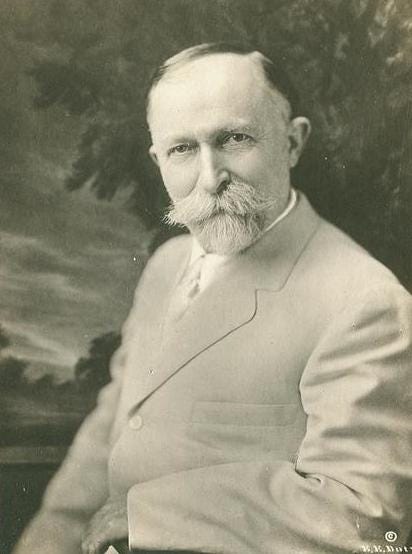
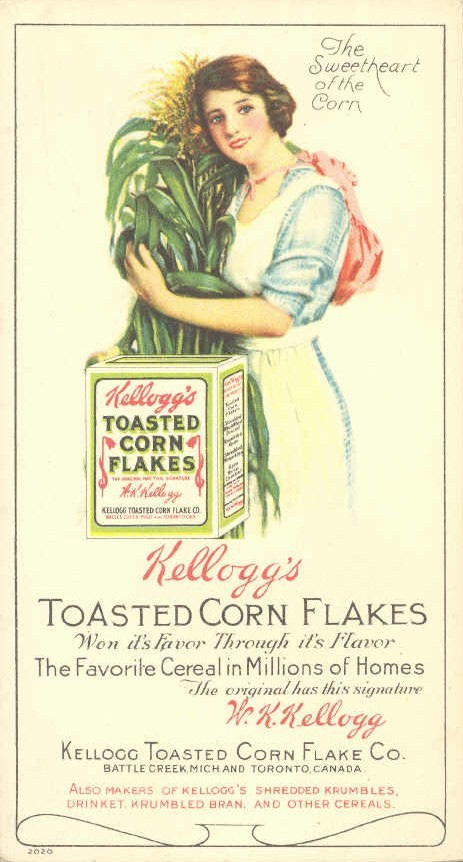
Those of us who recognize John Harvey Kellogg’s name most closely associate it with the Kellogg’s cereal brand, which began more or less in 1896, when John Harvey was issued U.S. Patent No. 558,393 for “Flaked Cereals and Process of Preparing Same.”
For still fewer of us, mention of the health-conscious physician-turned-entrepreneur conjures some association with his Seventh Day Adventist religious background. But for those who do remember this about Kellogg, the association tends to be quite strong. I’ve been told many times, and in no uncertain terms, that Kellogg’s Cereal is a “religious project” and that the brand’s signature corn flakes were intended to play some role in preventing the consumer from sexual excitation. (How exactly this is supposed to work my interlocutors have never managed to explain.)
But truth be told, the characterization of Kellogg’s project as “religious” isn’t altogether wrong. Kellogg was part of a social movement spanning roughly 1890-1929 known as the Progressive Era, a time when thinkers and innovators were contending with the social issues that had arisen as a result of the Industrial Revolution and finding promising linkages between the health of the individual and the health of the collective. This was the era of trust-busting and Upton Sinclair’s The Jungle – the novel that would eventually lead to the founding of the FDA – first-wave feminist Elizabeth Cady Stanton and women’s suffrage, efforts to preserve the environment by naturalists like John Muir, and the prohibition of alcohol.
Much of this era’s activism had its basis in human rights advocacy: from trust-busting to reforming slums and eliminating poverty to containing industrialization and political corruption. But what we denizens of the twenty-first century often forget is that such advocacy wasn’t considered at odds with Christianity: in fact, it was inspired by it. Early feminist Jane Addams – founder of the Hull House in Chicago – counted Calvinist-turned-spiritualist Thomas Carlyle and noted Christian anarchist Leo Tolstoy among her biggest intellectual influences. Upton Sinclair saw Jesus Christ as a proto-socialist figure and advocated for a “socialist Christianity” capable of protecting the poor.
And John Harvey Kellogg saw the Bible and science not only as irreconcilable but as fundamentally intertwined. “I can not stop the heart’s beating, or make it beat faster or slower by commanding it by my will,” he wrote in 1901:
But there is a will that controls the heart. It is the divine will that causes it to beat, and in the beating of that heart that you can feel, as you put your hand upon the breast, or as you put your finger against the pulse, an evidence of the divine presence that we have within us, that God is within, that there is an intelligence, a power, a will within, that is commanding the functions of our bodies and controlling them.
Whether or not you’re a person of faith, it’s hard not to see Kellogg’s view as an elegant one: there is a breath of life that animates the body, something that extends beyond our own freewill and connects us to the cosmos. This is a view that has been espoused just as readily by Sufi mystics, Buddhists, and Kabbalists alike.
But Kellogg was a Seventh Day Adventist during a time when good works and social progress were linked up with popular Christian doctrine. There was faith in its lyricism, and then there were rules to follow. As chief medical officer of the Adventist-owned Battle Creek Sanitarium, Kellogg followed Adventist prescriptions for health: patients were to maintain a vegetarian diet, abstain from tobacco and alcohol, and follow a moderate-to-rigorous regimen of exercise. Adventists believed that a bland diet reduced the need for the sort of “carnal stimulation” frowned upon by Protestantism – hence the corn flakes (and aforementioned rumors about them).
There is no doubt that Kellogg was a pioneer in the realm of medical science. He understood the importance of photo- and physiotherapies, and was leagues ahead of his time in theorizing about the linkages between the gut biome and our physical and mental health. But his concept of good health – aka “wellbeing” or “wellness” – was tightly bound up with Adventist moral righteousness. One was “well” if and only if she was living a morally unimpeachable life, which meant not just turning the other cheek and abstaining from vices like alcohol and tobacco but following church-sanctioned imperatives to get and stay healthy.
Halbert L. Dunn and High-Level Wellness
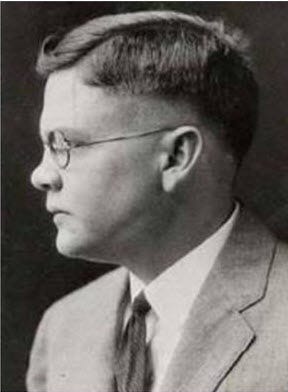
Kellogg had a natural successor in biostatistician Halbert L. Dunn, whose work for the Mayo Clinic would eventually garner him the unofficial title of “father” of the wellness movement.
Born in 1897 during the height of American Progressivism, Dunn would no doubt have been influenced by popular Christian concepts of good public works and private virtue. After working as an attending physician at various hospitals in New York and Minnesota, Dunn was hired by Mayo in 1929 to derive a system for coding medical statistics. This led to a twenty-five-year career as Chief of the National Office of Vital Statistics, where Dunn would apply his biostatistical findings to develop concepts of public health, wellness, and vitality.
Dunn saw health not simply as the absence of disease, but as the holistic vitality, aliveness, and engagement of a human subject. “[Wellness] is not a relatively flat, uninteresting area of ‘un-sickness,’” Dunn wrote, “but is rather a fascinating and ever-changing panorama of life.” He saw humans as “bio-psycho-social beings” existing along a continuum of severe disease to peak wellness. At our most well, we experience vitality – i.e. excitement, energy, enthusiasm – and the maintenance of this condition will depend upon the intersection of many physical, psychological, and social factors. According to Dunn, whether an individual is “vital” or flourishing might depend on whether the course of her life is animated by purpose-driven or goal-directed behaviors, whether she reports a sense of freedom in her personal and social lives, and whether she has a prior history of disease.
This conceptual framework revolutionized a pathology-centric medical model that defined health as the absence of illness. Dunn’s ideas spread like wildfire, in no small part due to the fact that Abraham Maslow introduced his famous Hierarchy of Needs in 1943, directly in the middle of Dunn’s tenure at the National Office of Vital Statistics.
The modern concept of wellness as self-actualization – and self-optimization as a perpetual striving-towards-wellness – wasn’t so much established as re-established by Dunn’s work. Like his forebears, Dunn’s definition of holistic wellness would align closely with Christian concepts of virtue. In a 1966 paper called “Mental Health and the Concept of High-Level Wellness,” Dunn reported that “consumerism and materialism” stood athwart the growth of empathy and altruism that engender high-level wellness. Giving of oneself – and in a Christlike fashion – could actually improve one’s health.
Wellness in the 21st Century
Perhaps it doesn’t surprise you that wellness as we understand it in America today has its roots in Christian virtue ethics: we’re a country founded by Protestants, after all!
But you might be surprised by how these same concepts continue to permeate healthcare today. From the food pyramids – original and revised – to the premiums we place on exercise, endurance, and restraint, to our concept of certain foods, goals, and lifestyles as “good” or “bad,” ours is a healthcare system that bears the indelible stamp of Kellogg and his coevals.
And to be clear, this isn’t a categorically bad thing. Empathy and altruism have much to recommend them, as do regular movement and a vegetarian diet. It’s when these things become not just valuable guidelines but moral imperatives – and those who fail to follow them ostracized outcasts, the slovenly damned – that the pursuit of high-level wellness can become fanatical, its pursuers dogmatic. If you’re wondering how dehumanizing practices like human trafficking and eugenics could have gained any sort of ideological popularity in the United States, look no further than the false dichotomy between the “ill” – i.e. the dispensable, the subhuman – and the “well.”
But how does any of this apply to innovations in healthcare like research peptides? As usual, it’s not the science behind the peptides or their remarkable curative properties that link them back to the centuries-old concept of wellness – it’s the public’s attitude towards them.
Stay tuned to learn more about smart peptide protocols, bodily optimization, and high-level wellness in subsequent columns!