
Will Anxiety Bring More Millennials to Peptides?
A generation in mental distress and the promises of a new scientific frontier

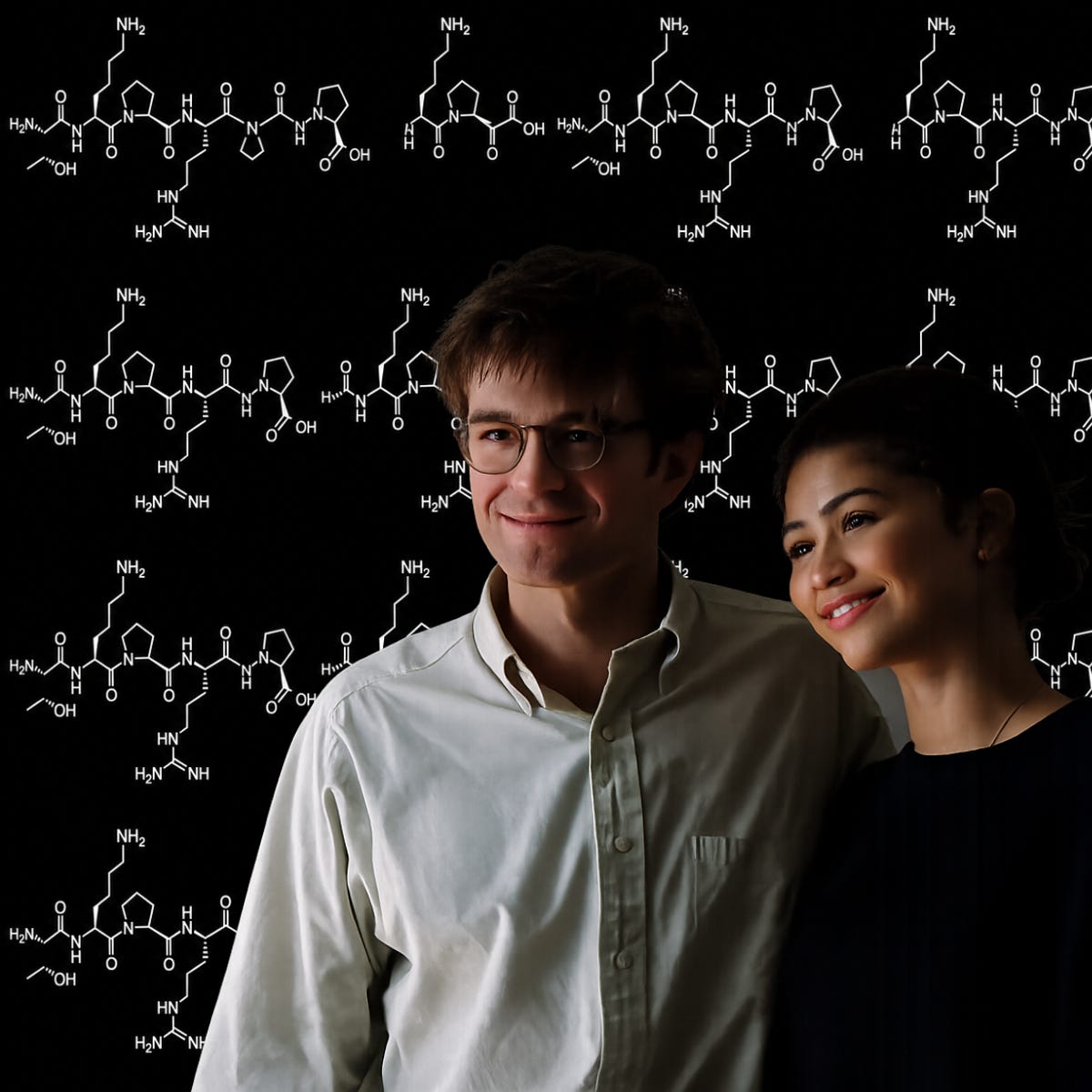
In a recent essay on Uneasy Going, her Substack about living with an anxiety disorder, writer Jenny Singer describes with warmth and wit an experience many of us are by now quite familiar with: learning that a person of means is doing a peptide protocol for a disorder we’ve been diagnosed with.
In Singer’s case, the person in question is Seagram’s heiress Hannah Bronfman, and the peptides are Semax and Selank, Soviet nootropics invented to combat stress in the military, the effects of ischemic stroke in cardiac patients, and – as we’re now finding some decades later – the effects of Generalized Anxiety Disorder on the brain-fogged mind.
“Why does [Bronfman] have a sanctioned way to take the edge off anxiety that my psychiatrists have never mentioned?” Singer writes in an essay aptly titled Is Everyone Peptide Maxxing for Anxiety Except Me? “Knowing that the ultra-rich have access to anxiety treatments that the rest of us do not has the sting of seeing the popular girl carrying the newest luxury bag, except the status symbol of it is melded with the chance that she will have a more functional, happy, pain-free life than us.”
Singer’s lament is a popular one. (We saw Hims & Hers Health’s stock valuation skyrocket after this Super Bowl commercial.) And given the increasing prevalence of ultra-wealthy longevity fanatics like Bryan Johnson who comfortably spend millions a year on the project of “not dying,” it’s not an altogether unfounded one.
But peptide experimentation isn’t just the remit of the ultra-rich, nor of the meathead or tech bro who’s ordering his stack off Telegram from a guy in Wuhan. As we’ve been seeing with more and more frequency post-COVID, the new frontier of American healthcare is the laptop screen. (Or phone screen, if you’re under the age of 35.) In fact, this is how Bronfman herself got the Semax and Selank she uses for anxiety: “I was prescribed peptides by my doctor, who I connected with via the Hone Health portal,” she writes.

Hone Health is a “personalized telehealth clinic” with a current market valuation of $189 million. Getting an appointment with a Hone Health physician is as easy as clicking the “get started” button, selecting your biological sex, and answering a set of intake questions – just like Hims, Hers, Willow, Mochi Health, etc. And while treatment with these providers is by no means cheap – membership with Hone can run up to $150/month, and the cost of a medication like tirzepatide can run as high as $499/month – it doesn’t require generational wealth in the order of a Bronfman’s to maintain. What it does require is some degree of middle to upper-middle-class stability; the kind many of the “regular people” depicted in the Hims & Hers Super Bowl commercial would be unlikely to have.
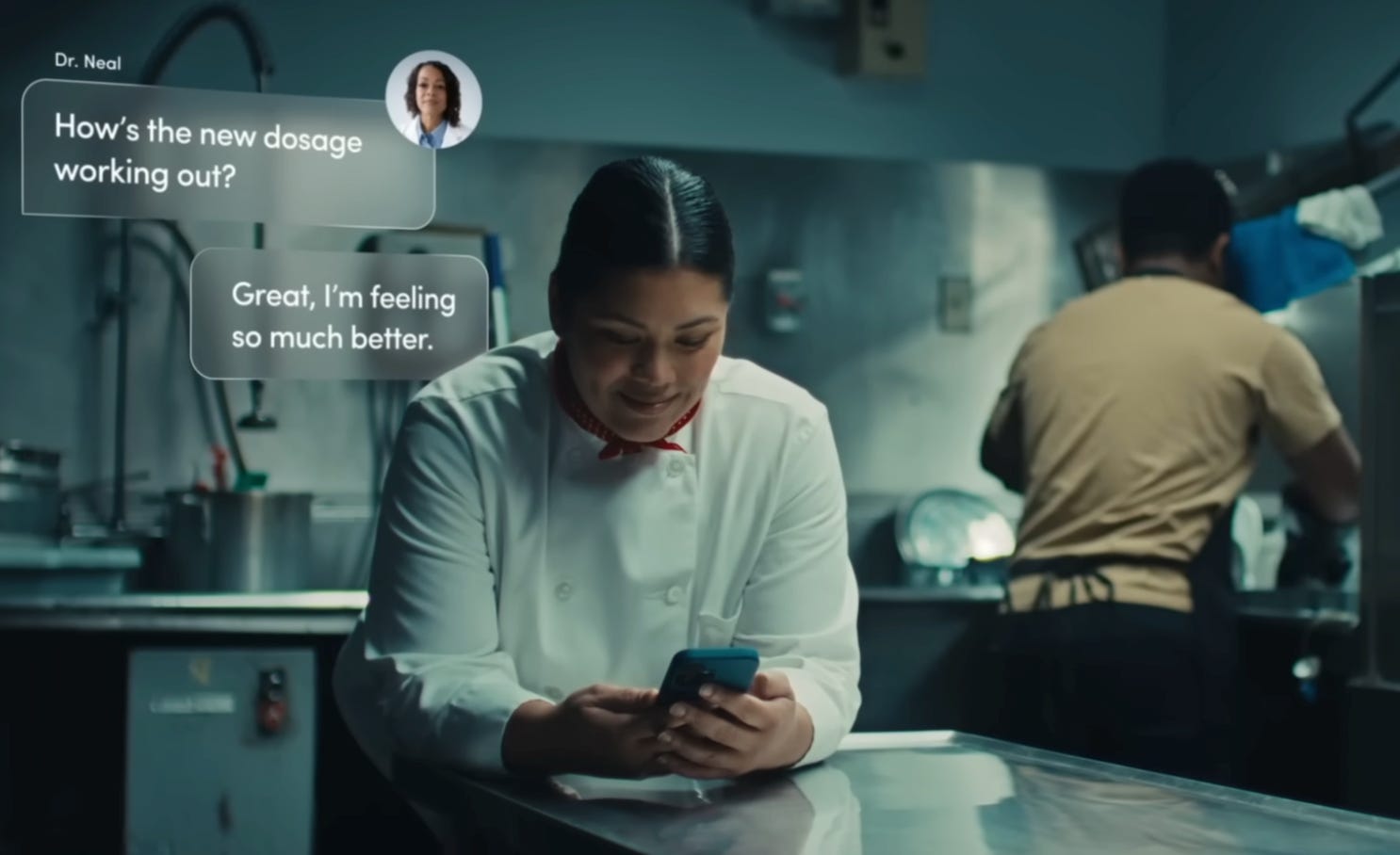
Patients tired of a broken and indifferent healthcare system are taking to telehealth companies like Hims & Hers, or ordering directly from the compounding pharmacies they partner with. Why spend months waiting for a 15-minute appointment only to be condescended to by a doctor who doesn’t know the first thing about the experience of being in your body, and doesn’t seem interested in listening? Why break one’s back trying to keep a job with decent health insurance only to learn that the doctors in your care network are limited by your provider in what tests they can run?
When certified physician’s assistant and integrative women’s health specialist Dagmara Beine posted this excellent essay about the comprehensive list of blood tests she orders to help patients who may be struggling with debilitating symptoms related to their hormonal, metabolic, or cardiovascular health – or simply system-wide inflammatory stress – she received a slew of negative comments from other practitioners in her field.
“One said the knowledge in my post was ‘of no value.’ One – a doctor – wrote: ‘Don’t listen to this crazy woman,’” Beine wrote in a follow-up essay to the original post. “I read every single comment. And what I felt wasn’t anger. It was heartbreak. Because I know where these providers are coming from. They’re inside a system that gives them 15 minutes, tells them which labs they’re allowed to run, and rewards them for staying inside the guidelines.”
Of course Beine is right: the fundamental disconnect between patient and practitioner has been a major thorn in American healthcare’s foot for decades, one insurance has only served to reinscribe by setting strict limits for what forms of care are covered and what aren’t. Telehealth is making major headway into collapsing the physical, financial, and temporal barriers between patients and the care they want. And while this in no way excludes compounding pharmacies, telehealth companies, or virtual practitioners from engaging in shoddy commercial practices or offering subpar care – use your discernment, reader! – it does mean a changing healthcare marketplace that allows integrative and holistic providers like Beine to meet patients where they need to be met and achieve a new level of self-understanding when it comes to their health.
Add to this changing marketplace the Trump administration’s defunding of research institutions like the the National Institutes of Health (NIH) and the National Science Foundation (NSF), the sluggish pace of randomized controlled trials, the centralization of those RTCs within Big Pharma companies like Eli Lilly and Novo Nordisk, and RFK Jr.’s antagonism towards the FDA. Then you’ve got an atmosphere in which patients are actually incentivized to take their healthcare into their own hands and start experimenting. There are no control subjects anymore: in this new era of ultra-personalized healthcare, we’re all test subjects.

While this can certainly have its hazards, there are many reasons to be excited about this era of experimentation. Any good scientist knows that beyond the penumbra of uncertainty there lies, if not complete certainty, a little bit more truth. And never have we as a society needed a little bit more truth than when it comes to our collective mental health.
I’m a 36-year-old writing this, with a life that better resembles Jenny Singer’s than Hannah Bronfman’s. But if you’re close in age to me, it won’t matter what you make in a year: you will know immediately, intimately, how collectively wrecked the millennial state of mind is. I could quote from the 2023 Pew article in which a nationally recognized neuroscientist names our country’s epidemic levels of depression and anxiety as a “new public threat,” or the 2026 survey that reveals just how poorly millennials and Gen Z are rating their own mental health. I could gesture to Demi Lovato’s strained self-perception and management of her public identity, or the tortured death of Liam Payne, or precisely how easy it is to get radicalized on the internet by anyone from antisemitic manosphere paranoiacs to genderbread Tumblr militants. I could point to the time when the entire country seemed to have a parasocial Twitter relationship with Donald Trump, or to how unsettlingly real Robert Pattinson’s stuttering, sweaty performance as Zendaya’s freaked out fiancé in The Drama feels.

But I doubt you’d need me to reference any of that to confirm that ours are anxious, dissatisfied, and depressive times. And I’m struggling to imagine a person under the age of 45 on either side of the political aisle who’d agree that the only solution to this problem is for mainstream behavioral health to continue operating as it has been for the past thirty years.
Cosmetic GLP-1 usage is unlikely to overtake a progressive millennial creative class that’s wary of weight loss for weight loss’s sake and the predatory beauty and “wellness” industries that promote it (viz. this great essay by writer Haley Nahman, which went viral for exposing the “everyone’s getting botox!” phenomenon for the psyop it is). But now that medicine is a bona fide consumer marketplace with advancements that double as consumer-directed trends, findings are emerging that link treatment with GLP-1s to everything from curbing addiction to healing traumatic brain injuries to restoring hair loss. A recent NYT essay explored all this and more, categorizing the American peptide boom and the GLP-1 renaissance as a “great experiment” with an optimistic, if unknown, outcome. Maybe there’s more to Ozempic and Zepbound than treating diabetes and producing a bunch of rail-thin famous bodies to be dressed in Prada at the Met Gala.
Could this mean millennials who would normally eschew GLP-1s for weight loss will begin exploring them for their potential cognitive benefits? Given that researchers are still puzzling over the effects of GLP-1s on the brain, it’s too early to say. But dyed-in-the-wool nootropics like Semax and Selank are overdue for a renaissance of their own. It may well be time for these compounds to escape the longevitysphere’s garden wall and find their way into the hands of an anxious generation tired, to quote a friend, of “popping a benzo and calling my life fixed.”
This summer, we’ll be exploring the world of peptides and mental health. What are Semax and Selank and how do they work? What other peptides might have hidden mental health benefits that are only just now being discovered? How do peptides differ from psychiatric medications in the ways they benefit our mental health? You’ll read journalistic deep dives, research analyses, and first-person accounts on these topics. And if you have any questions on this topic that you’d like us to answer, comment below!
Peptide Research, Done Cleanly — Peptide Partners. Independent HPLC/MS, batch COAs, and endotoxin screening to USP <85> validate identity and purity of peptides for research. Browse inventory and view certificates at Peptide Partners.